86,000 Visitors Experienced Edo Culture! "Edo Tokyo Campaign 2026 Spring" Event Report

The Tokyo Metropolitan Government has launched a new initiative titled the "Edo Tokyo Campaign," working in collaboration with various practitioners to present the appeal of tangible and intangible Edo culture, strongly alive in the heart of Tokyo.
As the first phase of this initiative, the "Edo Tokyo Campaign 2026 Spring" was held for three days (June 12th (Fri) – 14 (Sun), 2026), coinciding with the "Sanno Festival" of Hie Shrine, beloved by townspeople since the Edo period. The campaign took place at Marunouchi Building, Edo-Tokyo Museum, -Ryogoku- Edo NOREN, and ten other facilities across Tokyo.
The total number of participants over the three days reached 86,000 people[Note 1], with many young people and families taking part. Feedback from participants included comments such as, "It was a great opportunity to learn about the charm of Edo culture," and "I hope you will continue to share more of Edo’s attractions in the future."
[Note 1] The total number of participants includes the number of visitors to Marunouchi Building, Edo-Tokyo Museum, -Ryogoku- Edo NOREN, and the reported numbers from ten facilities in Tokyo.
* For footage from the event days, please see the archived video (link to external site).
Governor Koike Declares Opening; "Shizuka Gozen" Returns to Tokyo for the First Time in 23 Years
On June 12, Governor Koike took the stage at the opening ceremony held at MARUCUBE in the Marunouchi Building and declared the start of the campaign. The "Ippon-jime" hand-clapping tradition, which originated in the Edo-period townspeople’s culture, was performed by Governor Koike, Chiyoda City Mayor Higuchi, and Kaji-cho 2-chome Neighborhood Association Chairman Yoshikawa, along with everyone present at the ceremony venue, as they all joined together to pray for the campaign’s success.
The venue featured the Edo-style festival float "Shizuka Gozen," designated as a Tangible Folk Cultural Property of Tochigi Prefecture, which actually paraded in the Sanno Festival in the late Edo period. With the support of Chiyoda City, this campaign realized its return to Tokyo for the first time in 23 years.

Opening declaration

Photo Session: Neighborhood Association Chairman Yoshikawa, Governor Koike, and City Mayor Higuchi

Edo-style festival float "Shizuka Gozen" and the future festival float "Tsunaguruma"
Experience Edo Culture: Ohayashi and Mon-kiri Workshops
"Ohayashi" festival music has been performed at the Kanda Myojin Festival and Sanno Festival since the Edo period. With no musical scores, it has been passed down orally from the Edo period to the present day. At MARUCUBE in the Marunouchi Building, ohayashi performances and hands-on workshops were held with the cooperation of ohayashi groups from Chiyoda City and Oyama City in Tochigi Prefecture.
At -Ryogoku- Edo NOREN, visitors enjoyed a workshop for "Mon-kiri," a traditional Edo paper-cutting pastime in which family crests are cut out of paper. Originally used as a craftsman technique during the Edo period, it eventually spread as a popular pastime among common people.
 Ohayashi experience demonstration
 Mon-kiri experience
Voices of participants
- It was an event where we could casually experience Edo culture.
- Just thinking that I was playing the same paper-cutting game as people in the Edo period really excited me!
Showcasing Edo Culture in Collaboration with Local Practitioners and Ten Facilities Across Tokyo
The Edo-Tokyo Museum hosted stage events allowing visitors to experience Edo culture first-hand over two days, June 13 and 14.
Local performing arts rooted in various areas of Tokyo were brought together, including "Edo Sato-kagura (ritual ceremonial dance)" from Taito City (Wakayama Troupe), "Hizato Shishimai (lion dance)" from Hinohara Village, "Kashitate Dance" from Hachijo Town, "Akigawa Kabuki" local theater from Akiruno City, and "Mukōjima Geisha Troupe: Hana no Ozashiki (elegant geisha performance)" from Sumida City (Mukōjima Bokutei Association). Furthermore, lectures by experts were delivered, such as "Traditional Crafts of Sumida" by the Sumida Traditional Crafts Preservation Society, "Festivals of Edo" by Edo Customs and Culture Researcher Masumi Horiguchi, and "Edo Townspeople Culture as Seen through Ukiyo-e" by Kokugakuin University Professor Murasaki Fujisawa.
In addition, in collaboration with ten facilities—including museums, shrines and temples, and Tokyo Metropolitan facilities—we hosted special exhibitions and lectures available only during this period, such as the National Archives of Japan's special exhibition "Wasshoi! Tenka Matsuri" and a special lecture at the Sumida Hokusai Museum. Free loop-line shuttle buses connecting the facilities and a stamp rally enhanced visitor mobility, encouraging them to explore more venues to experience Edo culture.

"Mukōjima Geisha Troupe: Hana no Ozashiki" Edo-Tokyo Museum

Special Lecture: "Ryogoku as Depicted by Hokusai" Sumida Hokusai Museum

"Wasshoi! Tenka Festival" National Archives of Japan
New Interest in Edo Culture Sparked by the Campaign
Through the campaign, participants' understanding of and interest in Edo culture have steadily grown.
Voices from Participant Surveys
- I want to share the charm of Edo with those around me!
- It was a great opportunity to experience traditional festival floats and music, and to discover the charm of Edo culture.
- I love Edo culture, so I'm really happy that events like this are being held!
I hope you will continue to share more of Edo’s attractions in the future. - It was fascinating to learn about connections to Edo that we don’t normally notice in daily life.
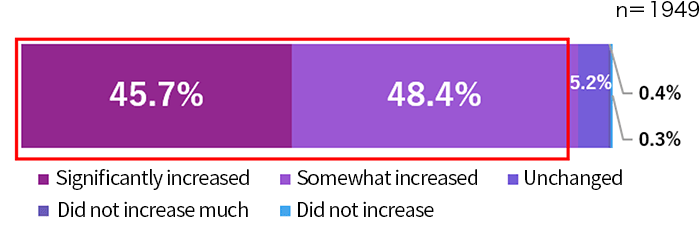
Understanding of and Interest in Edo Culture
Approximately 94% answered "Increased[Note 2]".
[Note 2] "Significantly increased" + "Somewhat increased"
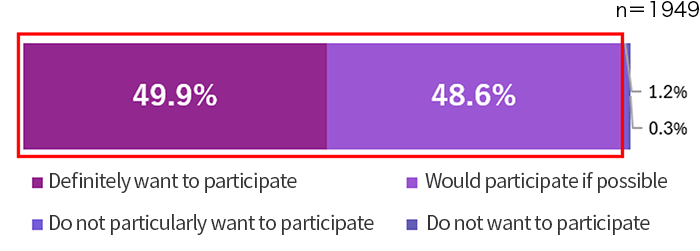
Willingness to Participate in Future Events
Approximately 99% answered "Want to participate[Note 3]".
[Note 3] "Definitely want to participate" + "Would participate if possible"
Scenes from Facilities Showcasing Edo Culture
We worked in partnership with various practitioners to present the appeal of tangible and intangible Edo culture, strongly alive in the heart of Tokyo.

Hanzomon Museum – Edo History and Culture Lecture: "Lords Who Are Neither Daimyo Nor Hatamoto"

Sumo Museum – Special Exhibition: "Scenes of Edo Sumo"

Ekōin Ukiyo-e Panel Exhibition

Mukōjima-Hyakkaen Gardens

Koishikawa Korakuen Gardens – Enjoying Japanese irises

Rikugien – Early Summer at Rikugien – Enjoying Satsuki Azaleas and Japanese Hydrangeas

Tokyo Waterworks Historical Museum – Nagaya (Row-house) Experience

Hie Shrine

Shuttle bus (Free)
Announcement: Edo Tokyo Campaign Summer 2026
The campaign will be held in conjunction with the Sumida River Fireworks Festival, one of Tokyo’s major fireworks events originating in the Edo period. Details will be announced in mid-July.

* For future updates regarding the "Edo Tokyo Campaign," please refer to the campaign homepage (opens in a new window).

This project is an initiative to promote the 2050 Tokyo Strategy (opens in a new window).
Strategy 15: Culture & Entertainment – "Showcasing the History and Culture Continuing from Edo"


Contact Us
Bureau of Citizens and Cultural Affairs, Culture Promotion Division, Planning and Coordination Section
Tel: +81 (0)3-5000-7733
